
Yampa River Stewardship Program
The Yampa River Stewardship Program (YStew for short) is a planning and capacity building program identified as a recommendation in the Integrated Water Management Plan (IWMP). YStew is led by Friends of the Yampa and supported by our partners at the Yampa River Collaborative and Colorado State University.
Landowner Guide and Practitioner Handbook

The YStew Landowner Guide and Practitioner Handbook provides strategies for dealing with the challenges of owning, managing, or working on lands along a wild and dynamic river. Click the buttons below for topic-specific strategies, and please don’t hesitate to reach out for more information or individualized assistance at emily@friendsoftheyampa.com.
View the Handbook
Other YStew Resources
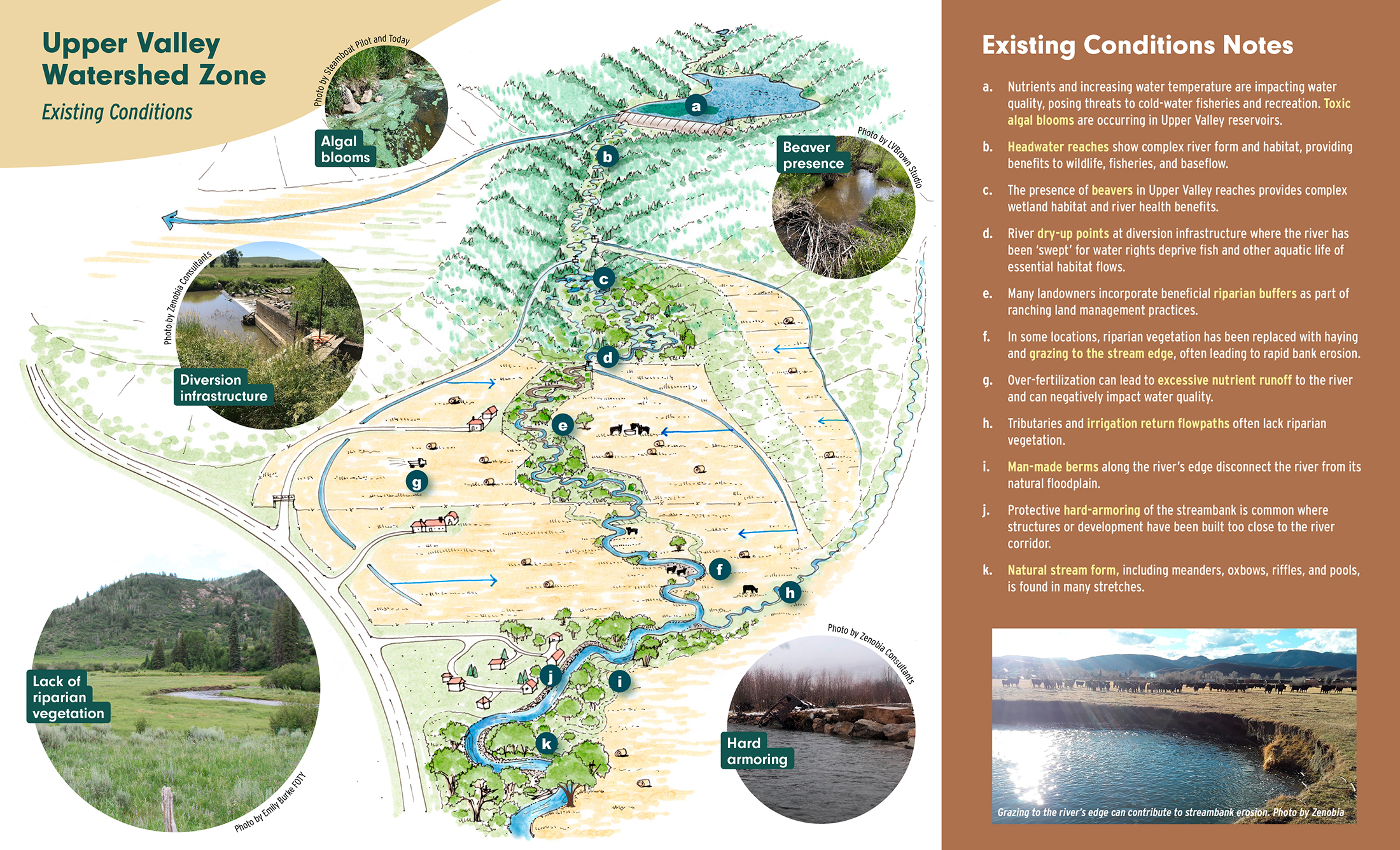
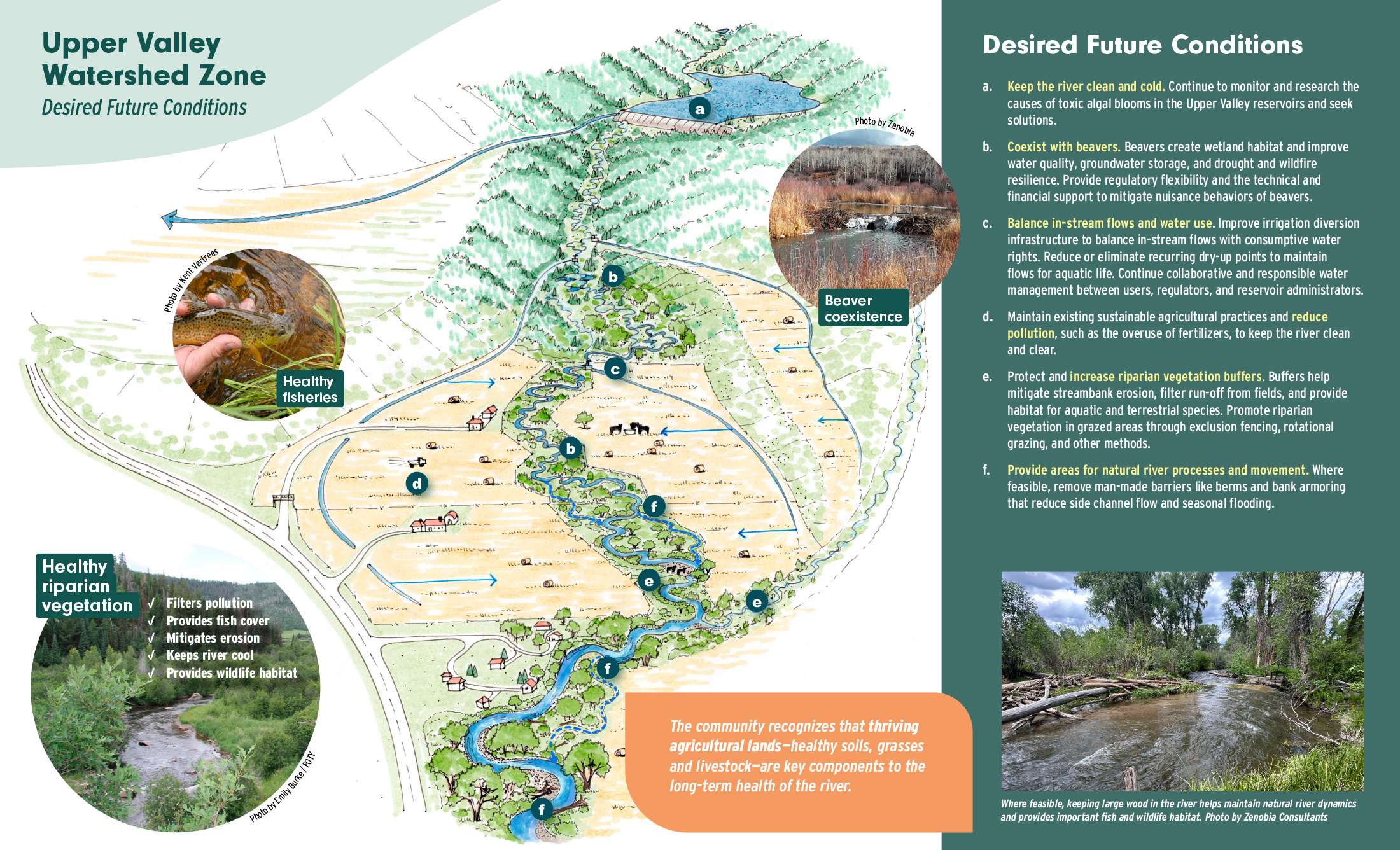
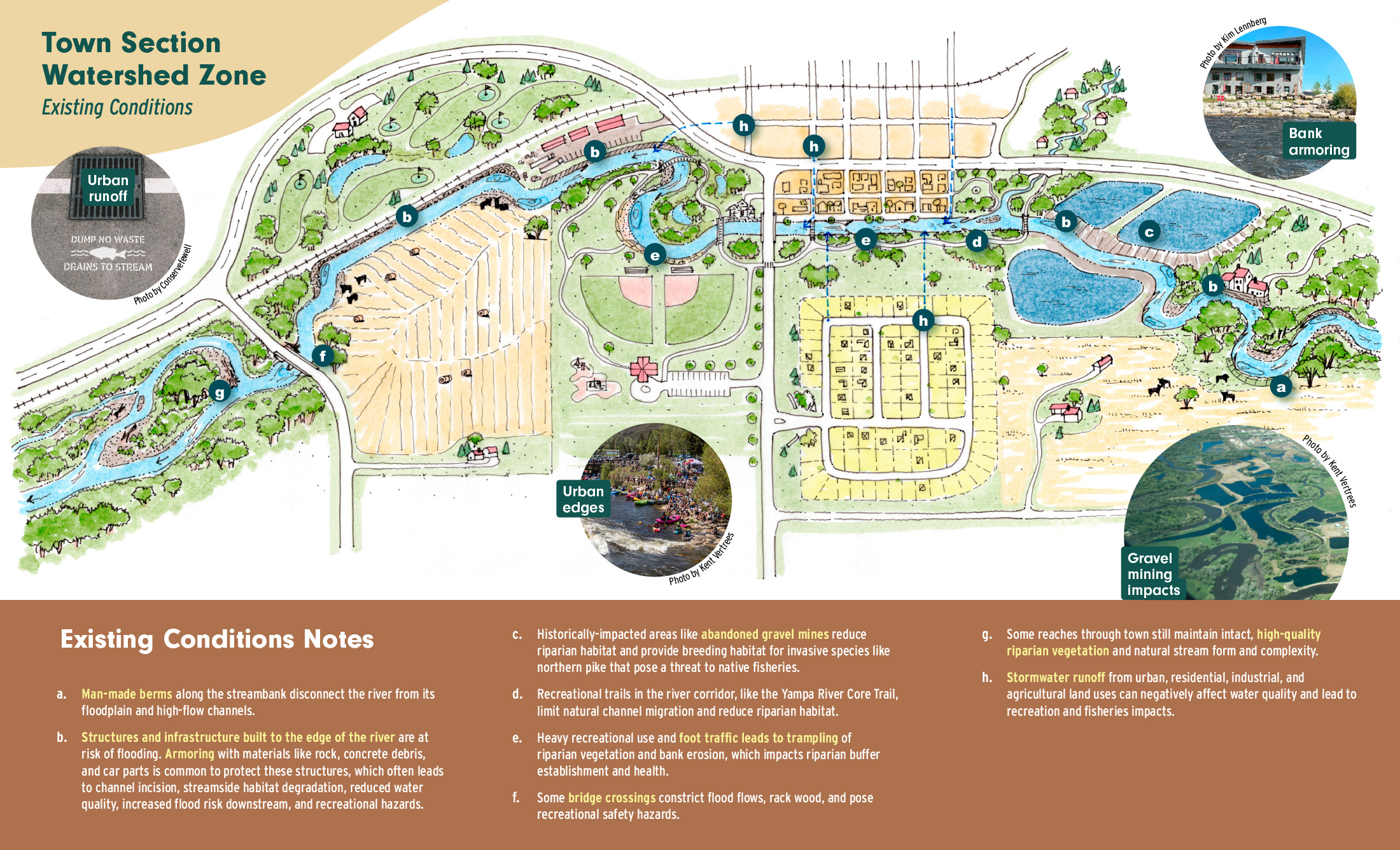
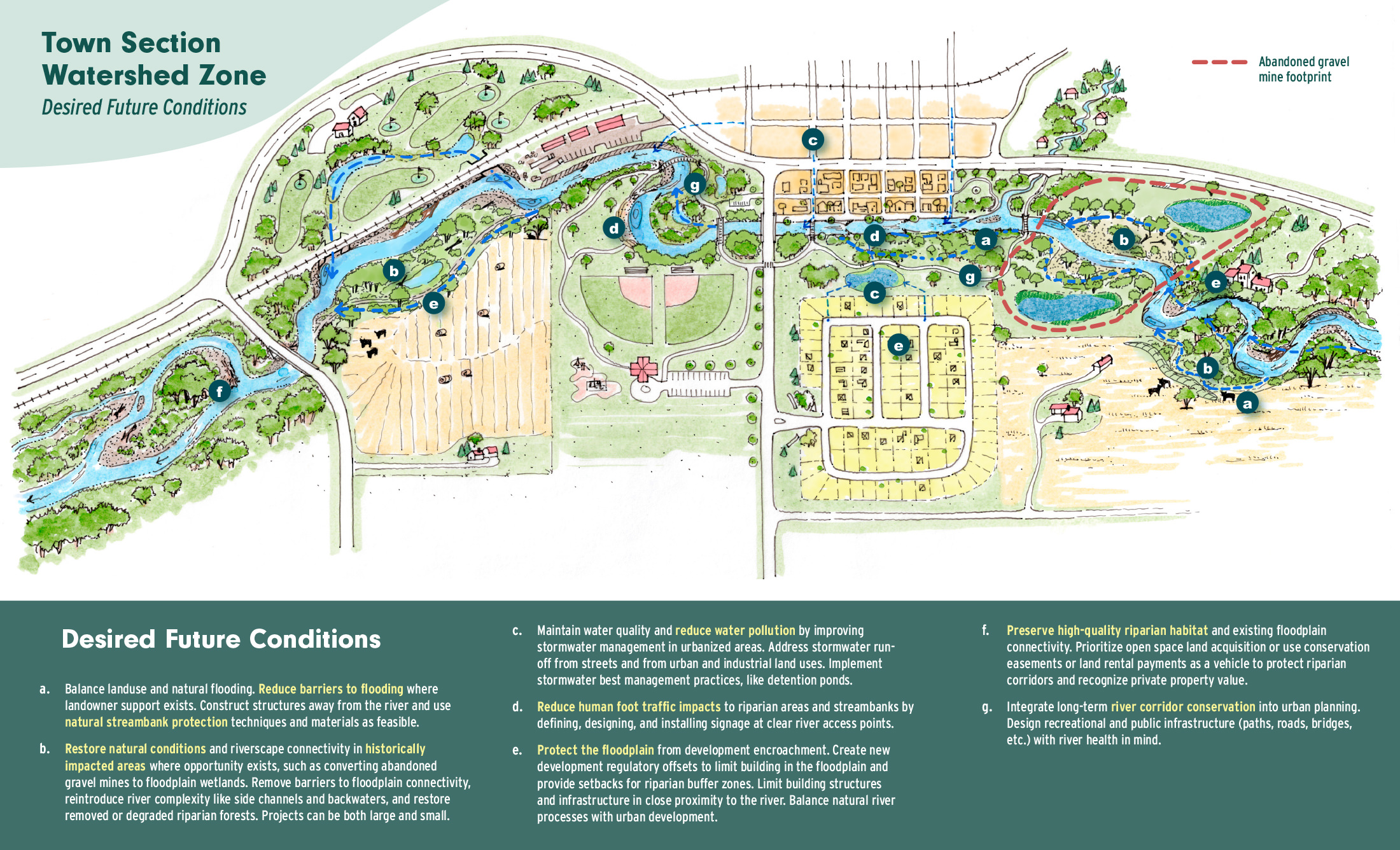
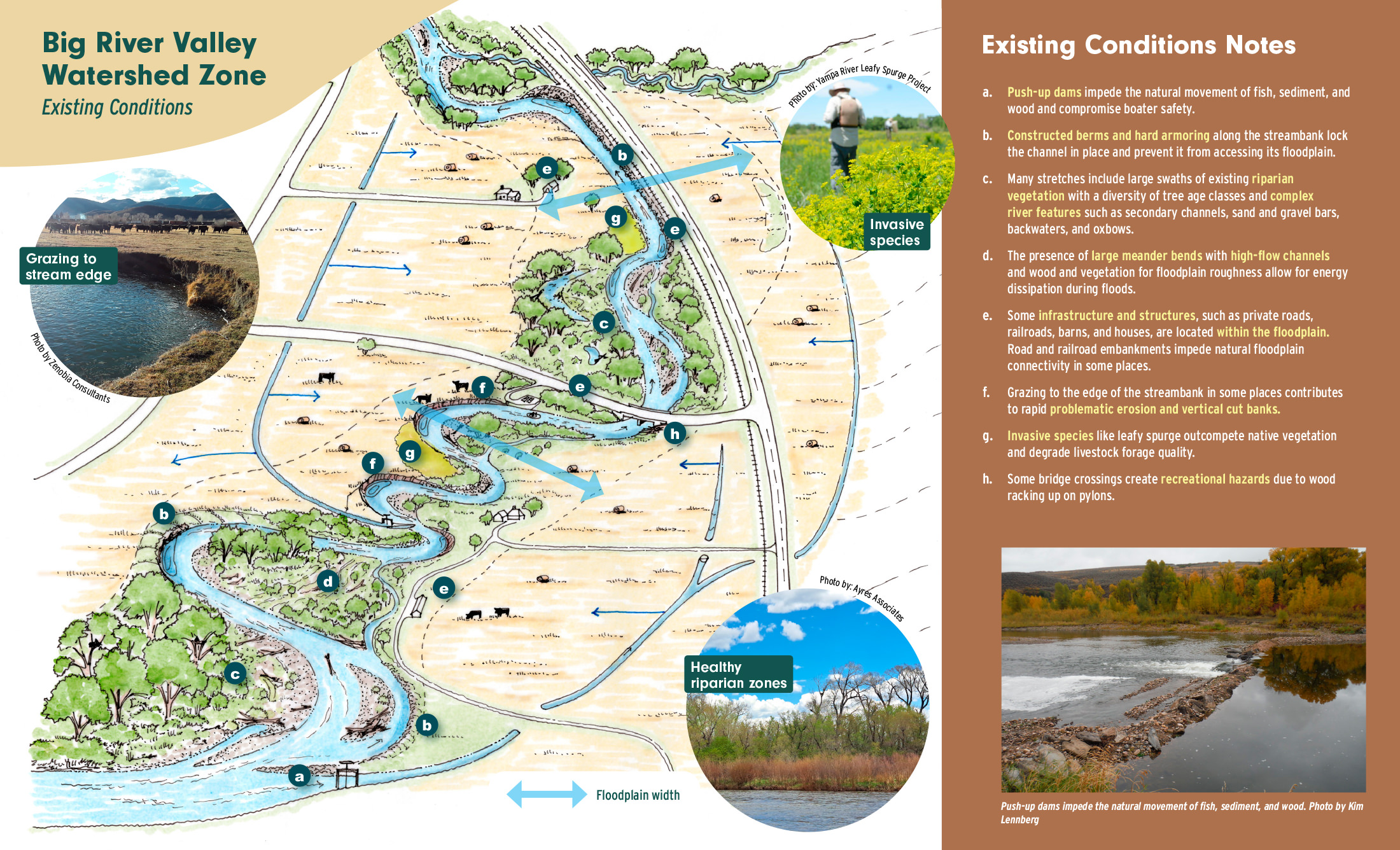
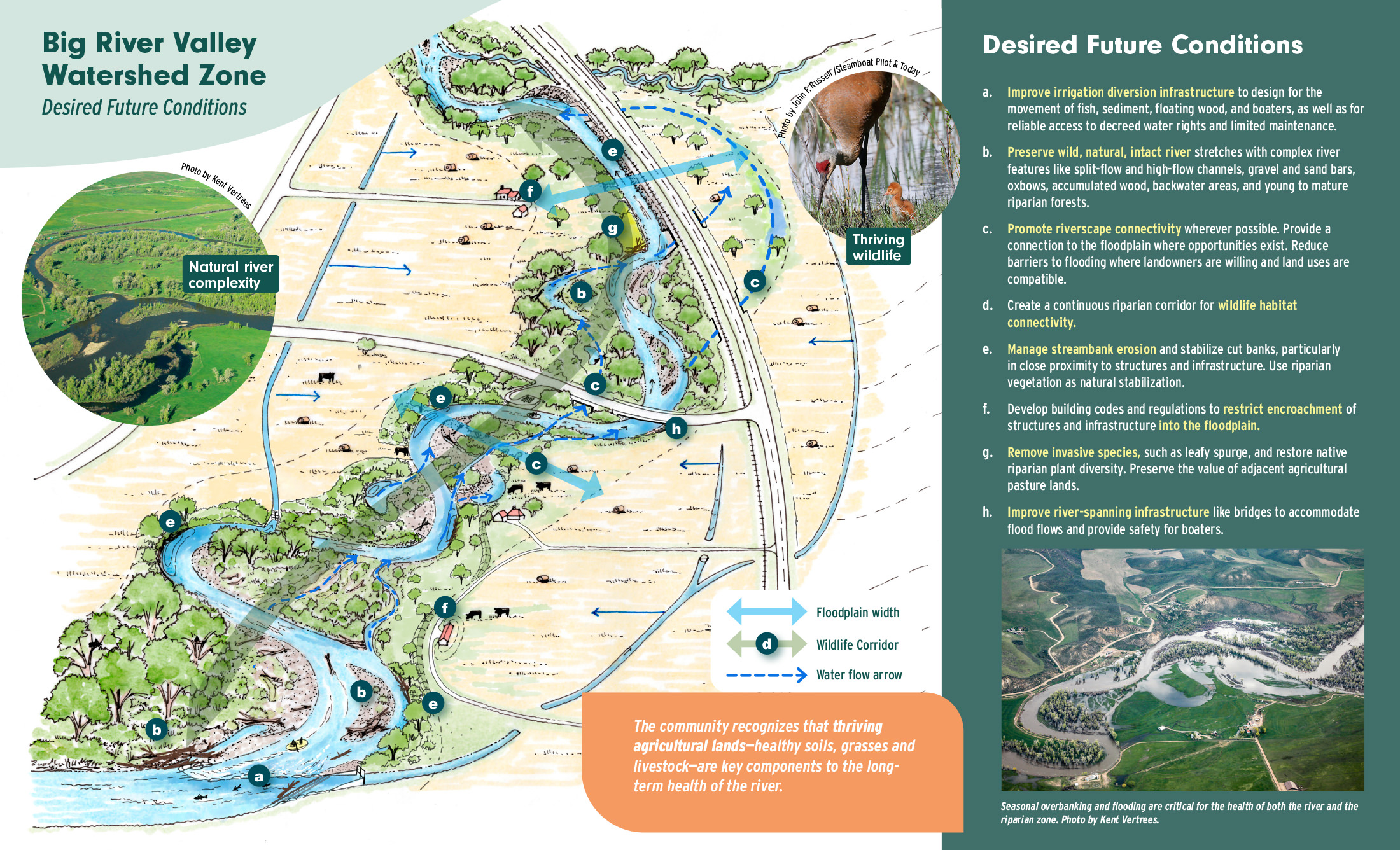
YStew has divided the river into different watershed zones, each of which reflects the unique characteristics of multiple sections of the actual river: the Upper Valley, the Town Segment, and the Big River Valley. Existing conditions were determined through a review of data from the Scorecard project and other available data, leading to illustrations of representative scenes for each watershed zone that serve as important tools during conversations about desired future conditions. Illustrations that showcase the desired future conditions identified throughout workshops and one-one-one outreach to stakeholders were then developed for each watershed zone.
Upper Valley
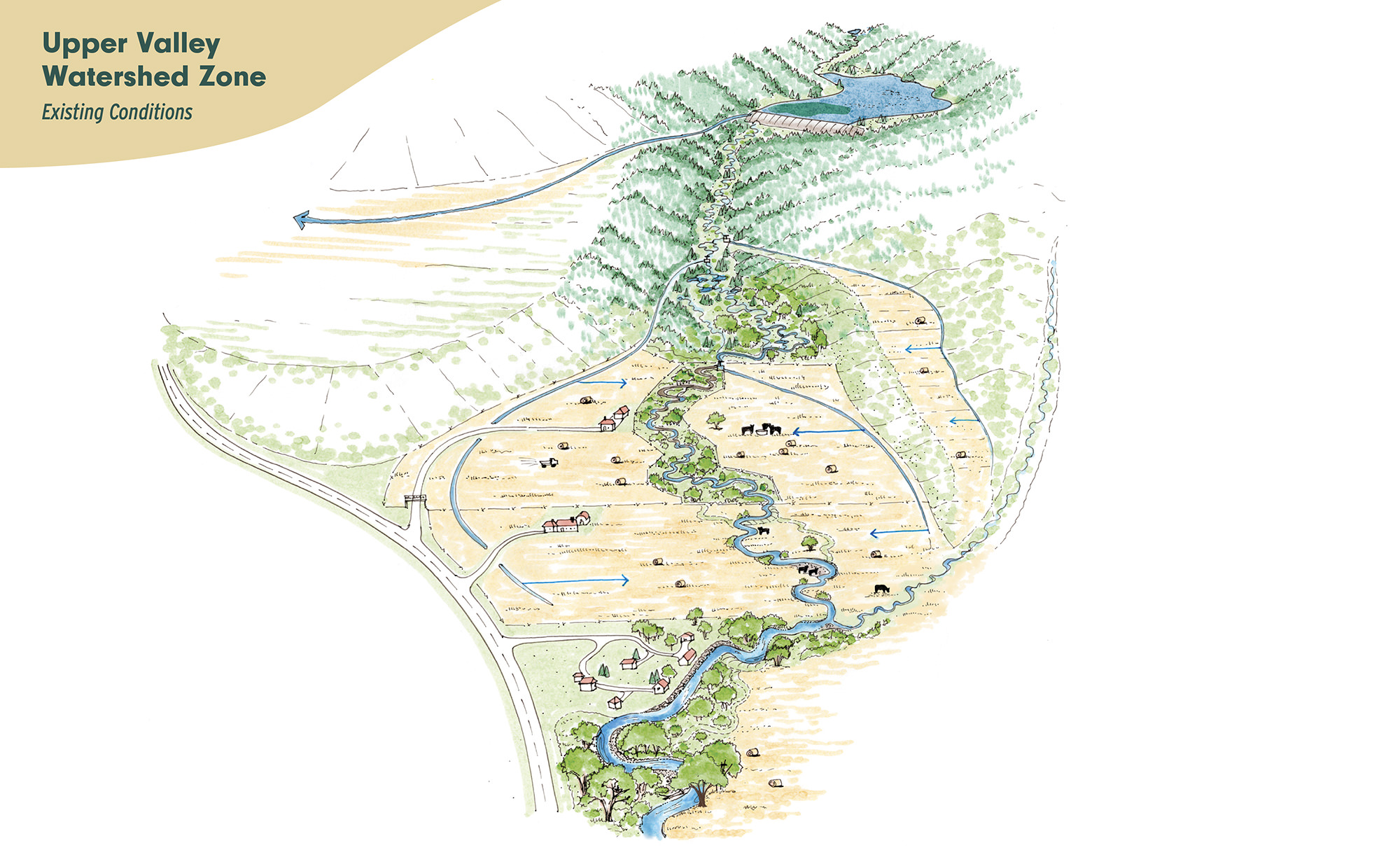
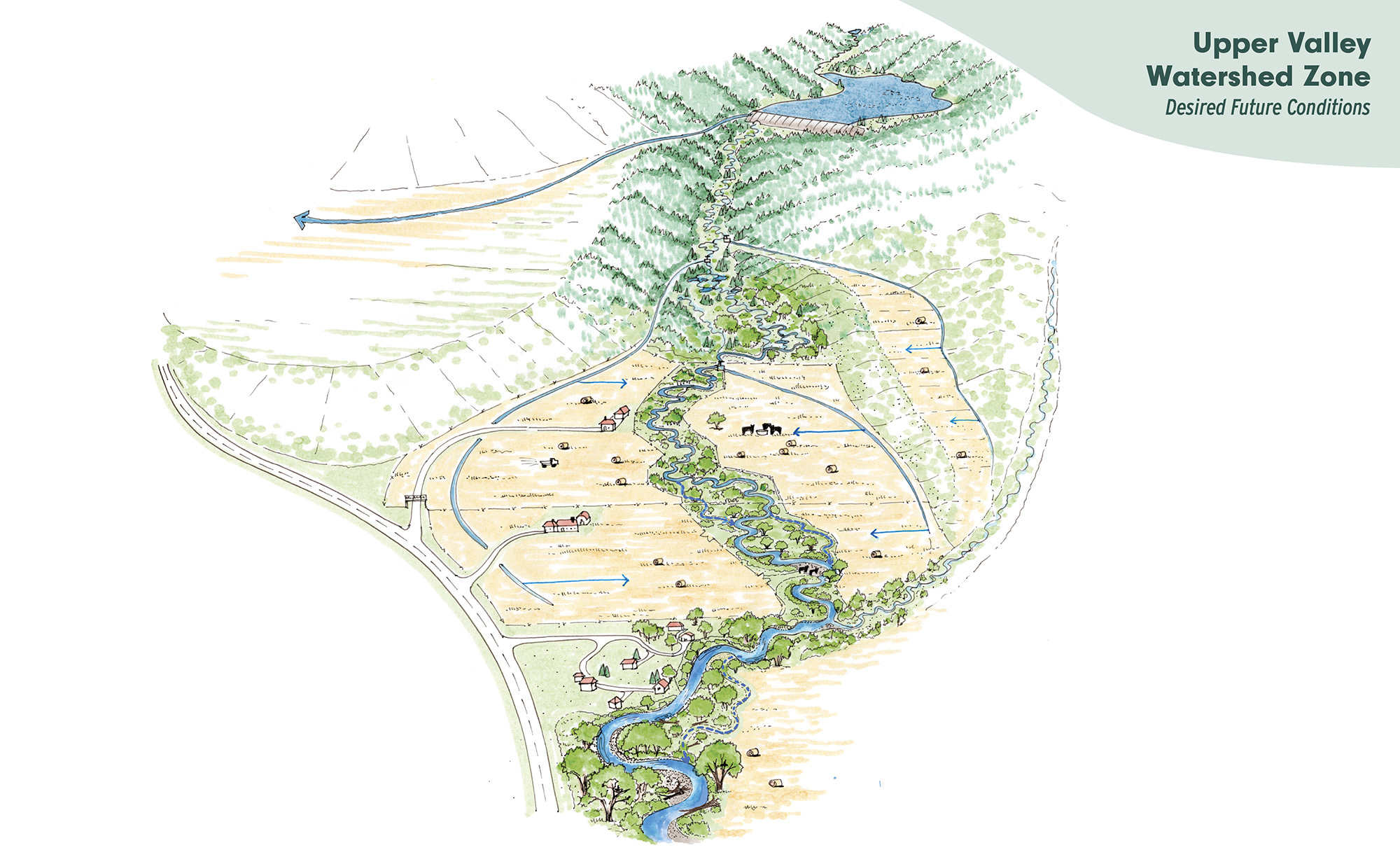
The Upper Valley zone is characterized by streams descending from the headwaters to relatively narrow agricultural valleys. In this zone, desired future conditions include:
- increasing streamside (riparian) vegetation to provide habitat and stabilize streambanks
- eliminating dry-up points to maintain river baseflows throughout the year
- balancing natural processes like flooding and channel migration with land use
- determining the causes of and mitigating toxic algal blooms in reservoirs
Town Segment
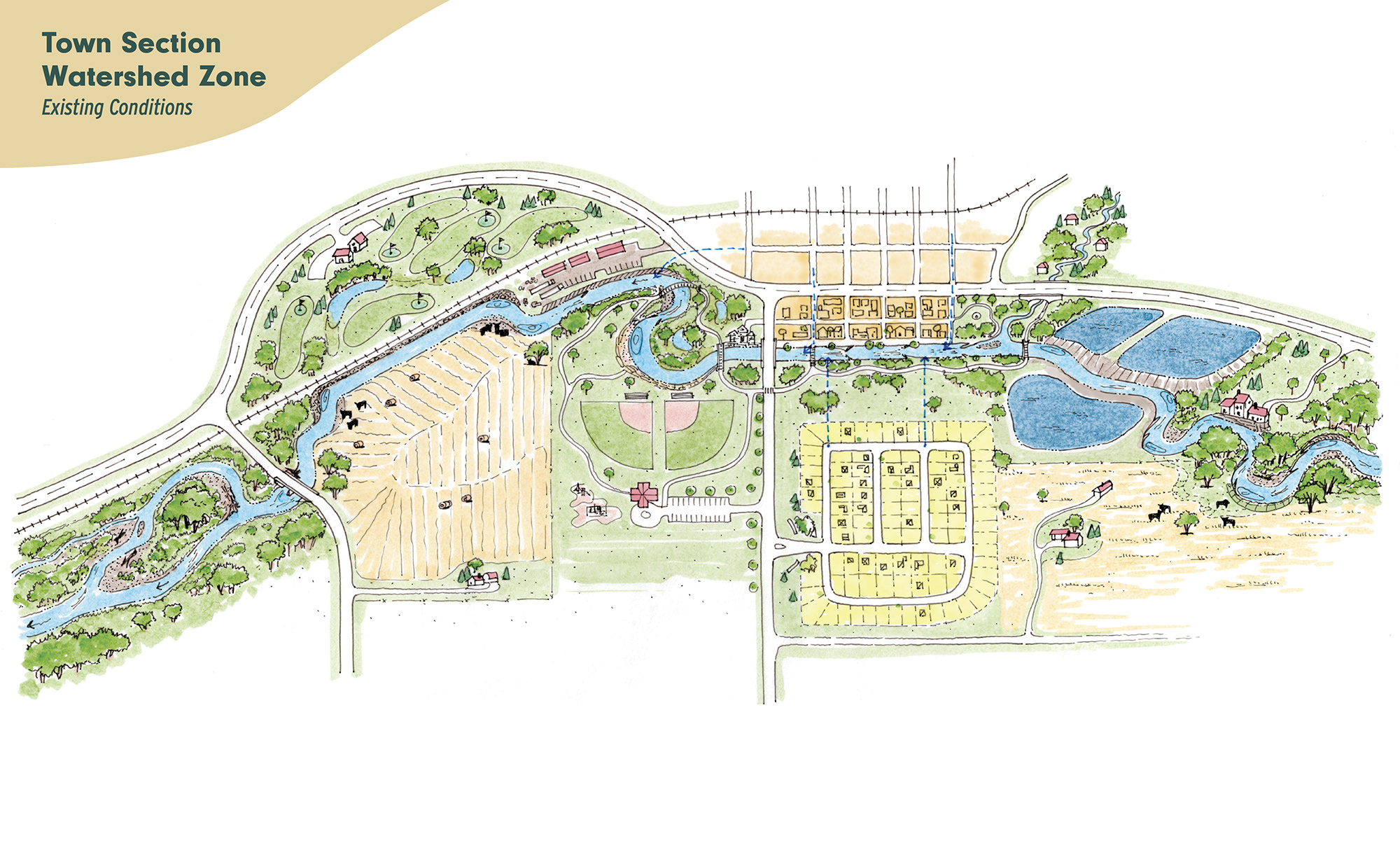
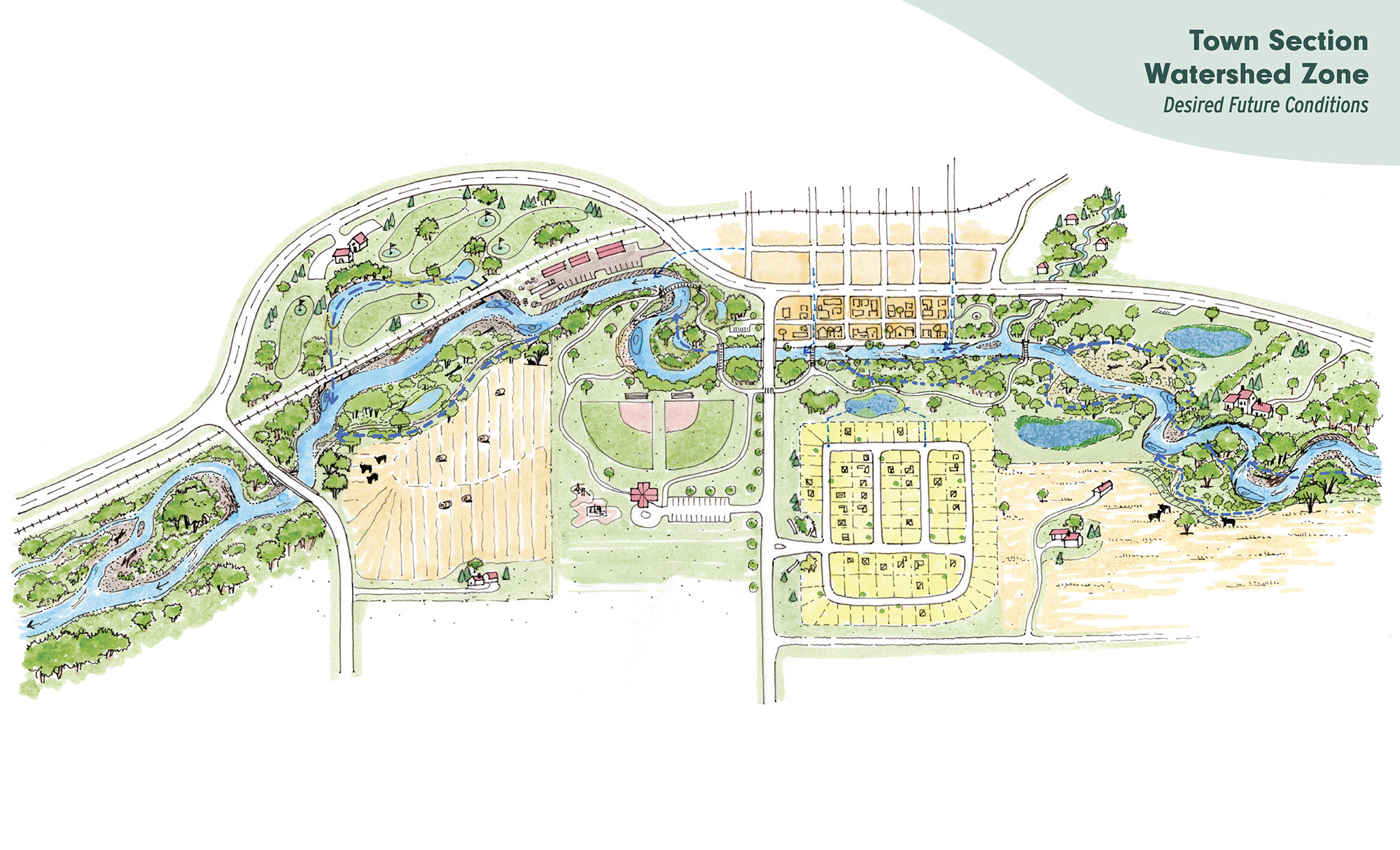
The Town Segment zone occurs wherever the river interfaces with urban and exurban land uses like residential, commercial, and industrial development. In this zone, desired future conditions include:
- improving water quality, with a focus on improved stormwater management and decreased river temperatures
- restoring of historically impacted areas like gravel mines and other development
- preserving the pockets of high-quality riparian areas that still exist
- reducing human foot traffic impacts to streambanks by designing clear river access points
Big River Valley
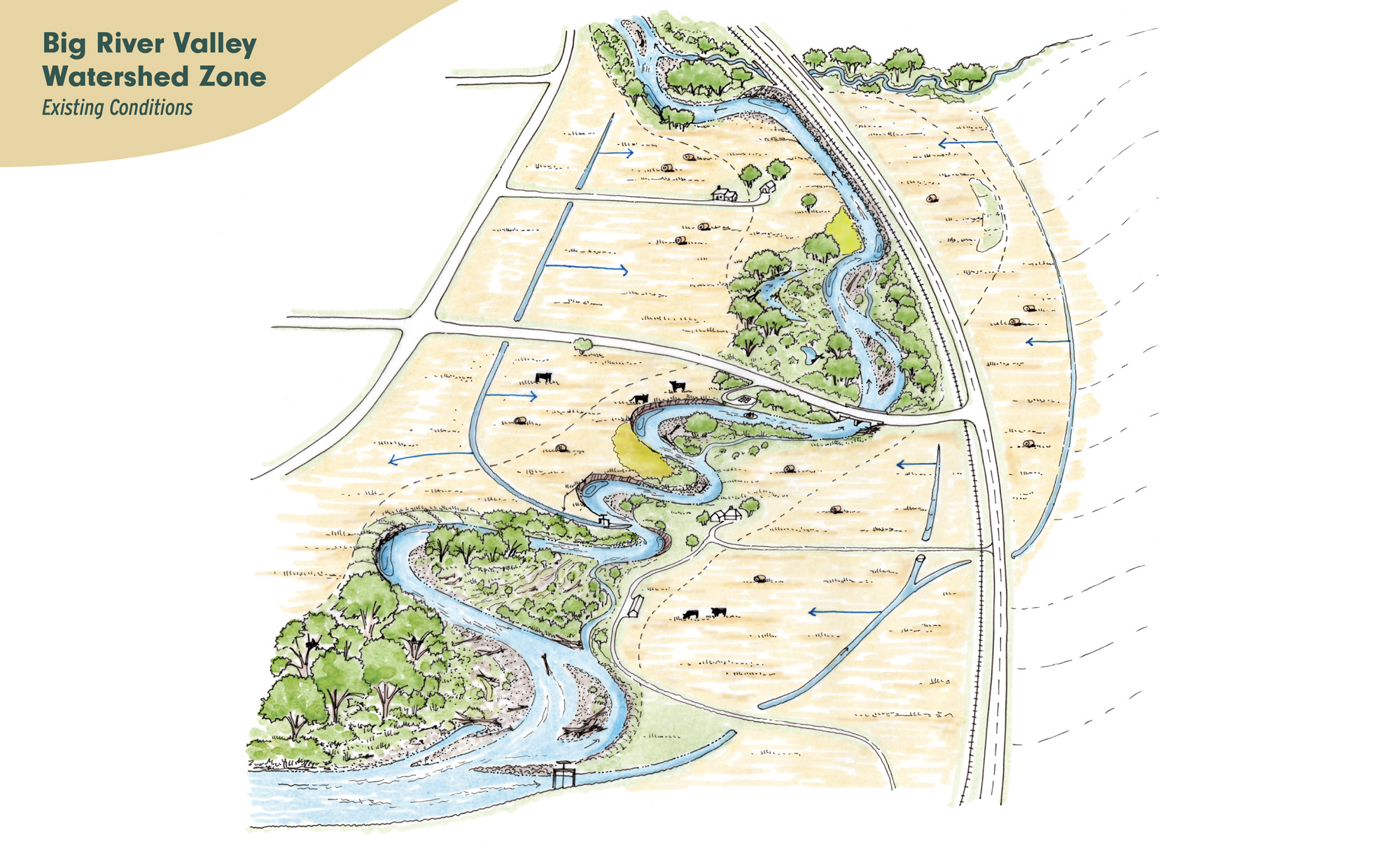
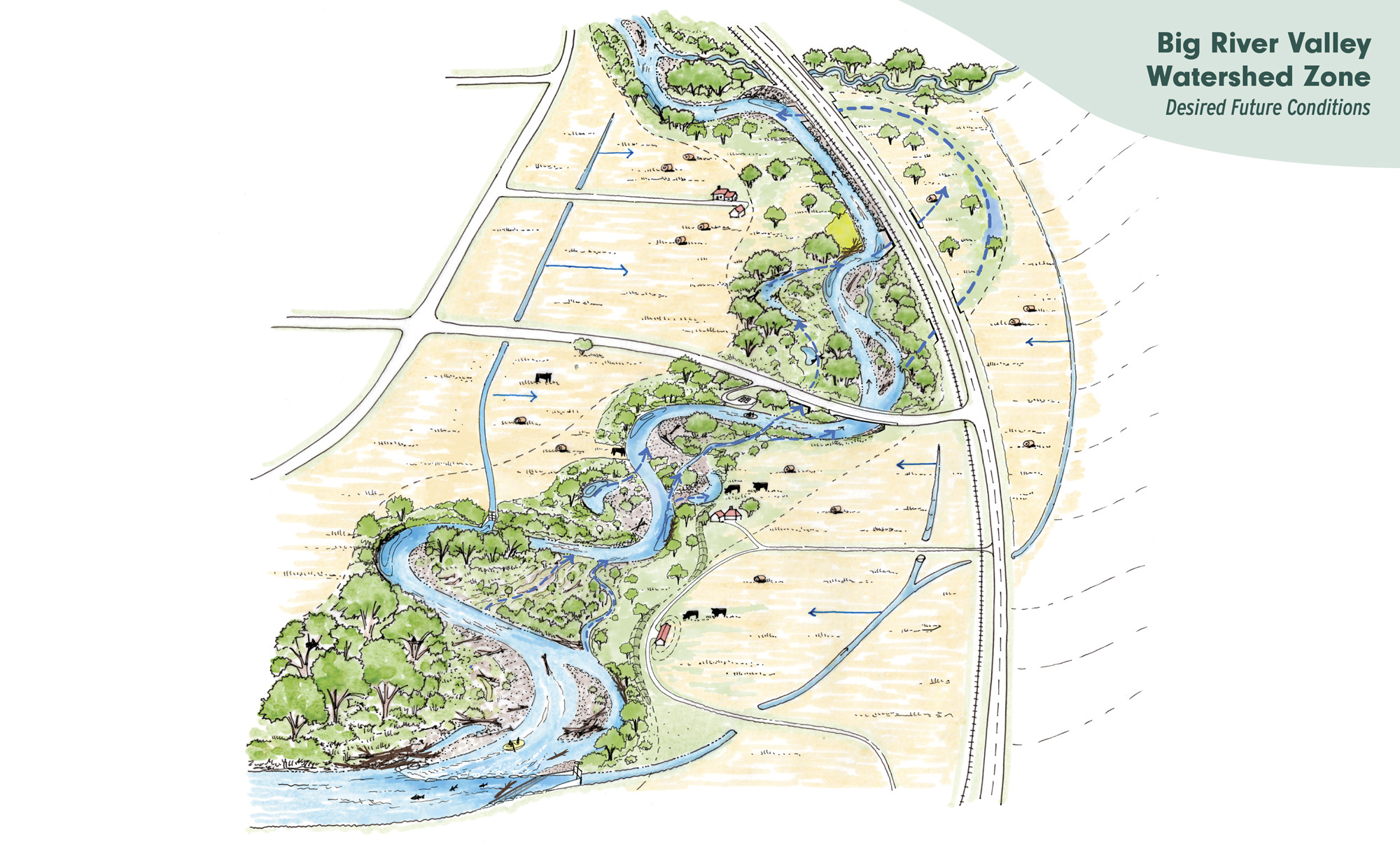
The Big River Valley is characterized by a relatively large volume of water running
through a wide agricultural valley. In this zone, desired future conditions include:
through a wide agricultural valley. In this zone, desired future conditions include:
- conserving riparian forests and wetlands to create a connected wildlife corridor
- modernizing irrigation infrastructure for multi-benefits to producers, river health, and fish
- allowing natural river processes like flooding and channel migration to occur where landowners are willing and land uses are compatible
- preserving this zone’s existing natural riverbed and streambank complexity
Thank you to our partners
Funders

Partners
Yampa River Collaborative
Join Our Mailing List
To stay up to date on YStew and opportunities to get involved, sign up for our mailing list
Project Sign-Up Form
If you have an idea for a project on land you own or manage along the Yampa River or a major tributary, please fill out this project form and we’ll be in touch with next steps. For questions, please reach out to Emily Burke at emily@friendsoftheyampa.com